

Google launches the Universal Commerce Protocol for AI shopping, built with Shopify
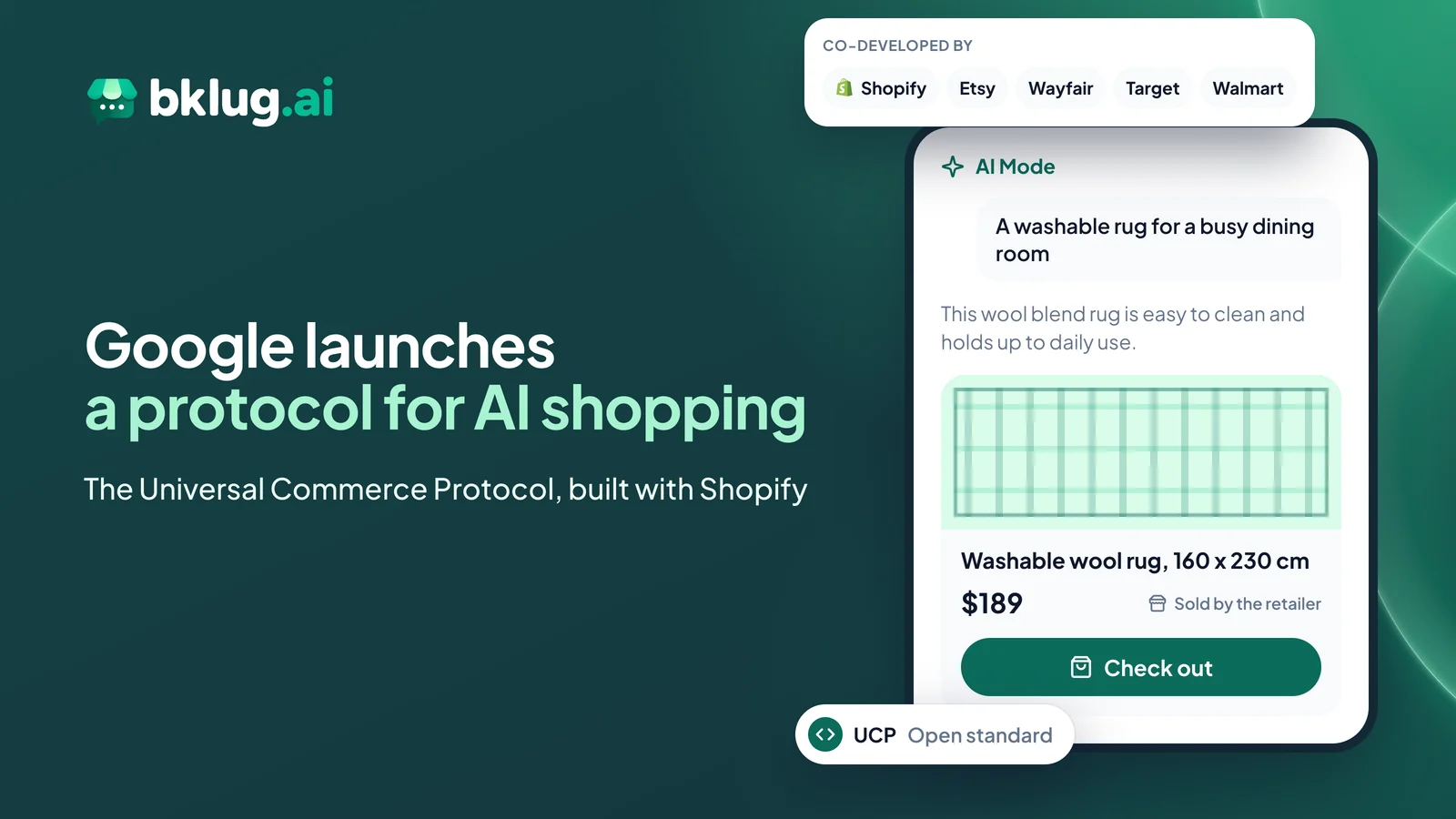
Google announced the Universal Commerce Protocol (UCP) on January 11, 2026, at the NRF retail conference. It is an open standard that lets AI agents handle shopping from finding a product to checkout and support after the purchase, co-developed with Shopify, Etsy, Wayfair, Target and Walmart. Google said it will soon power checkout from eligible US retailers inside AI Mode in Search and the Gemini app.
What Google announced
On Sunday, January 11, 2026, at the National Retail Federation's conference, Google introduced the Universal Commerce Protocol, or UCP. It is an open standard for agentic commerce: shoppers buying through AI assistants that act on their behalf. Google describes it as a common language between AI agents and the systems retailers already run, so an agent does not need a separate connection to each store.
UCP covers the whole journey, from finding a product to paying for it and getting help after the purchase. Google published it at ucp.dev and says it works with other protocols in the same space: its own Agent Payments Protocol (AP2), announced in 2025, Agent2Agent (A2A) and the Model Context Protocol (MCP). It is built to work across industries, not only retail.
- A separate connection to each store
- No shared standard between agents and stores
- A common language between AI agents and retailers
- From finding a product to paying for it
- Help after the purchase
- Works with AP2, A2A and MCP
Who is behind it
Google co-developed UCP with Shopify, Etsy, Wayfair, Target and Walmart. More than 20 other companies endorse it, including Adyen, American Express, Best Buy, Flipkart, Macy's, Mastercard, Stripe, The Home Depot, Visa and Zalando. Coverage describes the backers in slightly different ways, calling some co-developers and others early adopters; this article follows Google's own list.
Shopify's chief executive Tobi Lütke welcomed the idea of shoppers coming across products while they talk to an AI assistant. As quoted by TechCrunch, he said: "This kind of serendipity is where the best of commerce happens."
Checkout inside AI Mode and Gemini
The first visible use of UCP is checkout. Google said the protocol will soon power buying on eligible product listings in AI Mode in Google Search and in the Gemini app. A shopper researching a product can buy it from an eligible US retailer without leaving Google.
Payment runs through Google Pay, using the cards and shipping details saved in Google Wallet. PayPal is coming later. Retailers remain the seller of record, so the order and the customer stay theirs, and they can adjust the integration to their needs. In the coming months Google plans to bring this checkout to more countries and add related products and loyalty rewards.
- You: Find me a rug for my living room.
- Gemini:Here are rugs from eligible US retailers. You can buy here with Google Pay, using the card and shipping details saved in Google Wallet. The retailer stays the seller.
Business Agent and Direct Offers
Google announced two more tools for retailers the same day. Business Agent is a branded AI agent that shoppers can chat with on Search. It answers product questions in the brand's voice, like a sales associate. It went live on January 12 with Lowe's, Michaels, Poshmark, Reebok and others, and eligible US retailers can switch it on in Merchant Center. Google said it will later learn from the retailer's own data and handle purchases inside the chat.
Direct Offers is a Google Ads pilot that shows an exclusive deal, such as a discount, to a shopper in AI Mode who looks ready to buy. The retailer sets the offer in its campaign settings and Google decides when it is relevant. Petco, e.l.f. Cosmetics, Samsonite, Rugs USA and Shopify merchants are in the pilot. Bundles and free shipping are planned.
Google is also adding dozens of new product details in Merchant Center, such as answers to common questions, compatible accessories and substitutes, so AI answers can describe products more precisely.
What is still open
Most of these features were announced as coming soon, without dates. Checkout starts with US retailers only. UCP also arrives in a crowded field: on the same day, Shopify announced checkout inside Microsoft Copilot, and OpenAI, Amazon and Walmart have their own AI shopping standards and products.
What this means for conversational commerce
UCP makes one thing clear: the first step of a purchase is moving into AI assistants. A shopper can ask Gemini for a rug and pay without ever opening the store's website.
What does not move is the order. Google keeps the retailer as the seller of record, and on Shopify the order lands in the store's admin like any other. That is where the relationship can continue.
bKlug works for every Shopify order, however the customer bought: on the website, in a WhatsApp chat or through an AI assistant. The customer who bought through AI Mode still gets the WhatsApp order confirmation and delivery updates, and when they ask "where is my order?", the store's AI agent answers with the real order status. Every message lands in one customer history.
After the first order, the store can keep the conversation going: a campaign to recent first-time buyers, a back-in-stock message, a recommendation that fits what they bought. Meta charges businesses for these messages by type and country, and the store pays Meta directly, so they belong in the plan.
AI assistants will help more people find a store. Keeping them is still the store's work.
- Audience
- First order in the last 30 days
 From your Shopify data
- Send
- Tue, Jan 20, 03:00 PM