

Voice, Visual, and Chat: The Multimodal Future of Customer Service
How multimodal AI—voice, visual, and chat—is redefining what seamless customer service really means.
DATE
CATEGORY
HASHTAGS
READING TIME
Customer service is undergoing a radical transformation. While chatbots and automated replies have become commonplace, the future belongs to multimodal experiences that seamlessly blend voice, visual, and chat. This shift isn’t just about offering more options—it’s about reimagining how people interact with brands in ways that feel intuitive, human-like, and frictionless. In this article, we explore why multimodal AI is the next frontier in customer service and how companies can leverage it to meet rising consumer expectations.
The Shift to Multimodal Customer Experiences
Traditional customer service once relied on static forms, phone queues, or live chat—one channel at a time. Today’s consumers, however, expect more. They’re used to the instant, multimedia richness of apps like WhatsApp, Instagram, and TikTok. So why is most customer support still operating like it’s 2015?
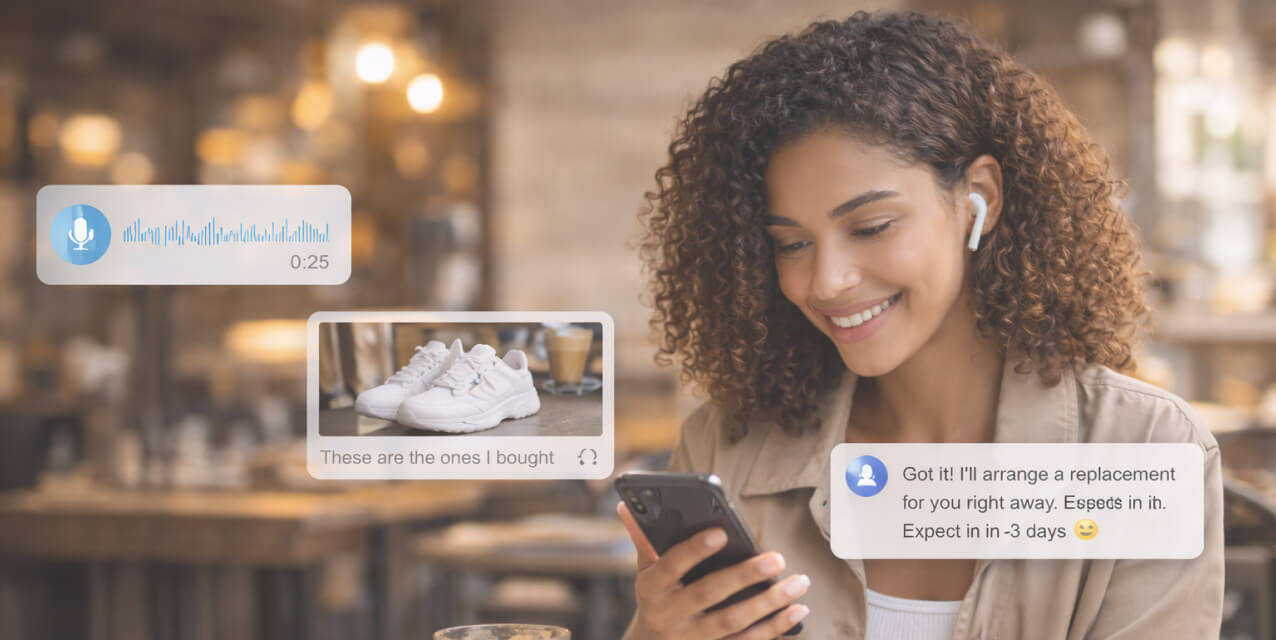
Multimodal AI changes this by enabling fluid transitions between voice messages, product images, and real-time chat. For example, a customer might upload a picture of a broken item, explain the issue via voice, and confirm a replacement—all in one thread.
Why Multimodal Matters
- Speed: Text is fast, but voice can be faster for more nuanced queries.
- Clarity: Images help eliminate misunderstandings.
- Empathy: Voice adds tone, which can dramatically improve the customer’s perception of service.
Blending these modes allows businesses to provide support that's fast, personal, and visually rich—something text-only bots can’t deliver.
Consumer Behavior Has Changed—Have You?
Modern buyers interact asynchronously. A shopper texts at 8 a.m., drops off, and comes back at 9 p.m.—expecting the brand to pick up the conversation exactly where they left off. They also expect the same assistant to remember previous interactions, support voice notes, and even understand a photo of the product they want to reorder.
This evolution creates both opportunity and urgency for brands. Get it right, and you earn trust. Get it wrong, and customers bounce to a competitor offering smoother experiences.
The bKlug Approach to Multimodal AI
bKlug enables brands to offer a fully multimodal customer journey inside WhatsApp. Here’s how:
- Voice-enabled AI assistants that understand and reply naturally.
- Visual product discovery using photo uploads.
- Rich chat flows that manage everything from product selection to checkout.
The assistant is trained to adapt in real time, switching between modalities depending on the user’s behavior—text, voice, or visual. No complex flow building or manual rule-setting needed.
“Today’s consumers don’t want a chatbot. They want a conversation that feels like texting a friend—complete with emojis, voice notes, and product pics.”
Where It Applies: Use Cases by Mode
- Voice:
- Explaining an issue with tone and emotion
- Quick product inquiries on-the-go
- Conversational FAQs
- Visual:
- Uploading a product to find similar styles
- Verifying received items vs. catalog images
- Visual troubleshooting (e.g., showing what’s wrong)
- Chat:
- Confirming orders
- Scheduling follow-ups
- Navigating complex decisions with assistant guidance
Each mode enhances the other—voice adds nuance, images provide clarity, and chat ties it all together with structure.
Multimodality Drives Higher Conversions
Studies show that adding voice and visual elements increases engagement and trust—key drivers of conversion. In high-stakes purchases (like fashion, electronics, or home goods), being able to see the product and talk it out matters more than ticking boxes in a form.
More importantly, multimodal support reduces friction, especially in mobile-first regions where typing isn’t always ideal.
Eliminating Operational Burdens
Implementing this kind of experience might sound complicated—but that’s where bKlug’s architecture shines.
- No internal AI or tech team required
- Fully managed setup and updates
- Launches in under 2 hours (store-size dependent)
bKlug’s proprietary system handles everything—from privacy and offensive content blocking to real-time product updates—so your teams don’t have to.
Security and Scale Without Sacrifice
bKlug was built with banking-grade security. That means:
- Customer data stays protected
- Offensive content is blocked by default
- Brands can scale without compromising on experience or trust
Who Benefits Most from Multimodal Support
- Multi-store brands managing a wide range of products
- Franchises with limited support resources
- High-traffic e-commerce shops with seasonal peaks
- Consumer electronics where visual guidance matters
- Fashion retailers needing visual & style matching
bKlug supports multilingual interactions, voice messages, and image-based search—all inside one thread. This opens the door to better support in diverse markets without additional staffing costs.
How to Get Started
Most teams hesitate to adopt multimodal AI because they fear complexity. But with bKlug, onboarding is simple:
- Seamless integrations with Shopify, VTEX, WooCommerce, and more
- AI assistants ready in hours, not weeks
- No need to design flows manually
3 Ways to Future-Proof Your Customer Experience
- Start with WhatsApp – It’s where your customers already are.
- Invest in Multimodal – Text-only bots won’t cut it anymore.
- Automate without losing personality – Look for AI that feels human, not robotic.
Final Thoughts
Multimodal is not a nice-to-have—it’s the new baseline. Voice, visual, and chat aren’t separate features. They’re how modern consumers naturally communicate. If brands don’t evolve, they risk losing relevance.
At bKlug, we believe in making that evolution easy. Whether you're running a fashion brand, a franchise network, or a global e-commerce site, bKlug enables you to meet your customers where they are—with conversations that feel real.